The Gardens Started Explaining Themselves
For a year the phone just pointed at gardens: a statue in Kildare, apple trees in Dublin.
6 catches
Made from 6 catches, March 2025 to June 2026.
Then, in Islington the following summer, the photos stop and notes appear, as if the gardens had finally started asking to be understood, not just kept.
First, the looking
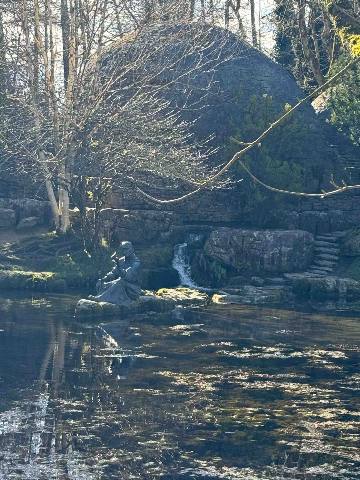
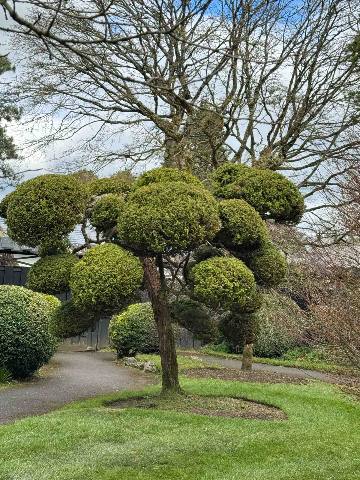
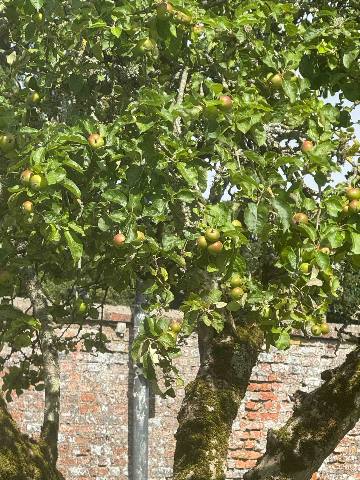
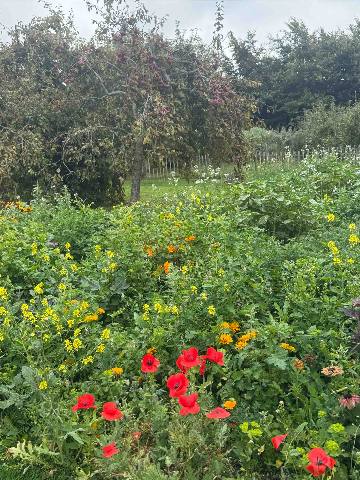
It begins quietly in Kildare in March, a statue by a pond and a stone structure, a carefully pruned ornamental tree nearby [1][2]. By summer the eye has settled on apple trees: one against a brick wall in Donabate [3], another standing over red poppies and yellow flowers in Balally [4]. No captions, no theory. Just gardens, collected.
[1]
A garden statue by a pond and stone structure Dublin, Kildare
[2]
A pruned ornamental tree in a garden setting Japanesega, Kildare
[3]
An apple tree in front of a brick wall Dublin, Donabate
[4]
A garden with red poppies, yellow flowers, and an apple tree Dublin, Balally
Then, the reading
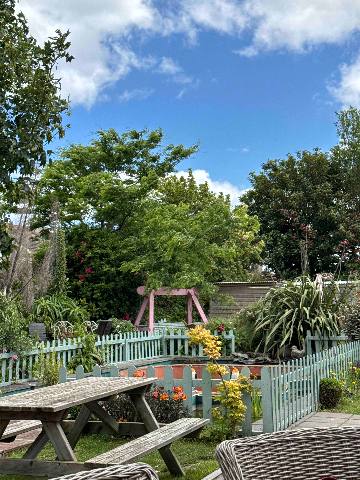
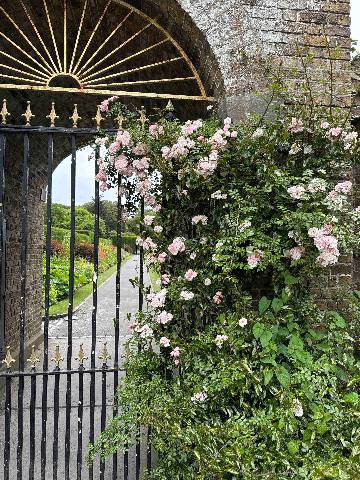
A year on, in Islington, the notes arrive. "Cottage gardens, originating in England, were historically utilitarian with herbs and vegetables" before evolving into "informal, dense planting" [5]. The next day: roses climbing an iron gate go back to Victorian England, symbolising "the intertwining of man-made and natural beauty" [6]. The same eye, now with footnotes.
[5]
Islington
[6]
Islington
The story starts with an apple tree against a brick wall and ends with a paragraph on why English gardens grow that way. The camera came first; the questions took a year to catch up.