humi · map.name
The Quiet Architecture of Play
Nobody photographs a playground unless they're looking at it as a building.



4 catches · Islington · 9 months
This gathered on its own, from 4 captures, in Islington, November 2025 to August 2026.
This thread starts in a children's library in Dublin and ends by a fountain in Billund, and the question underneath is the same the whole way: what makes a space actually invite play, rather than just permit it?
It starts indoors
The first capture isn't a playground at all: a brightly coloured children's library in Artane, wooden architectural features, casual seating [1]. The design language, low, warm, textured, is the one the rest of the thread keeps looking for outdoors.
[1]
Dublin, Artane, a brightly colored, modern children's library section with wooden architectural features and casual seating
Reading the theory, then checking the park
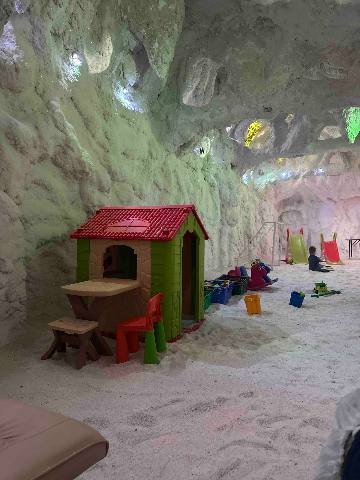
In Islington the looking gets deliberate. A saved piece on cave playgrounds argues they combine "the allure of natural landscapes with the creativity of play spaces", mimicking prehistoric shelters as a sensory experience [2]. Five weeks later, a photo of an ordinary playground structure in a residential park [3], the local reality held up against the idea.
[2]
Cave playgrounds combine the allure of natural landscapes with the creativity of play spaces. Such settings mimic prehistoric shelters, offering not just fun but a sensory experience, engaging children with textured …
[3]
a playground structure in a residential park area
The end of the line: Billund
The thread closes in the town built around play itself. But the photo isn't a ride or a crowd: it's a quiet stone fountain and plaza at twilight [4]. Even at the destination, the eye goes to the calm, built edges of the place, not the spectacle.
[4]
Billund, A quiet stone fountain and plaza in a themed urban environment at twilight.
Four captures, three cities, and the same subject each time: the fabric around play, wood, stone, texture, shelter, noticed more carefully than the play equipment itself.