humi · map.name
Where the Lawn Ends and the Animals Begin
Is nature what grows, what watches back, or what people arrange around it? This thread keeps refusing a clean answer.


11 catches · Donabate · 21 months
This gathered on its own, from 11 catches, September 2024 to June 2026.
Is nature what grows, what watches back, or what people arrange around it? This thread keeps refusing a clean answer. Its route runs from cultivated leisure to animals that seem less willing to stay in the frame.
The cultivated version
The early frames make cultivation feel like a service, with leisure, ornament and food given equal care. A suburban park changes the scale, leaving young trees beside a hoop and houses rather than a polished escape. [1] [2] [3] [4]
[1]
Belek, Antalya, A resort pool area with palm trees and a manicured lawn under a sunny sky.
[2]
Belek, Antalya, a decorative white tree hung with blue glass eye ornaments
[3]
Atasehir, Istanbul, a traditional Turkish breakfast spread with various small dishes of food on a table
[4]
Dublin, Donaghmede, a suburban park with saplings, a basketball hoop, and houses in the distance
Who is actually contained
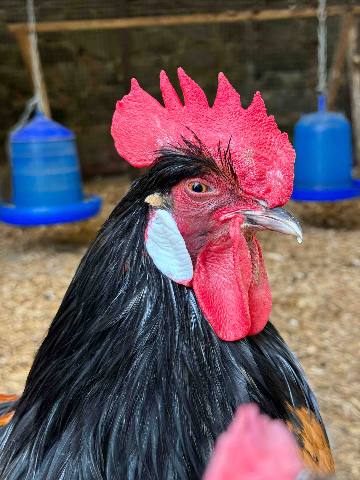
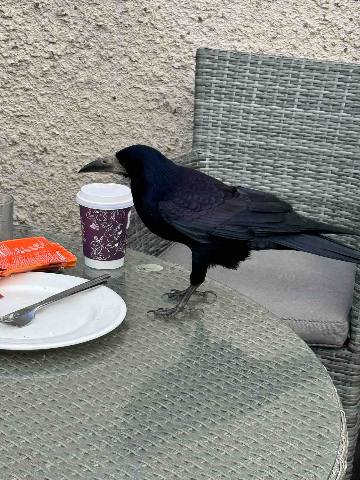
That control gets shakier with the animals: fence, coop, cafe table and enclosure all frame them differently. The crow on the cafe table is the neatest reversal, occupying the furniture while the cheetah remains behind a barrier. [5] [6] [7] [8]
[5]
Dublin, Donabate, a black bird standing on grass near a wooden fence
[6]
Dublin, Donabate, a close-up portrait of a black and brown rooster in a coop with hanging feeders
[7]
Dublin, Donabate, a crow on a table at an outdoor cafe
[8]
Dublin, Greenhills, a cheetah in an outdoor enclosure seen through a fence

Nature, made and named
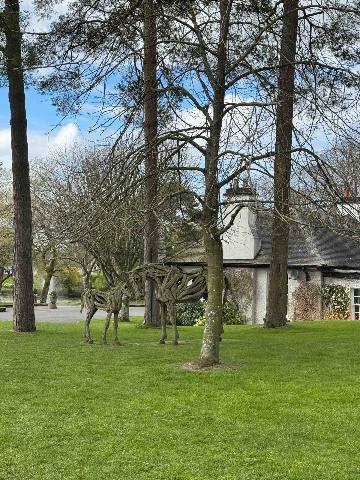
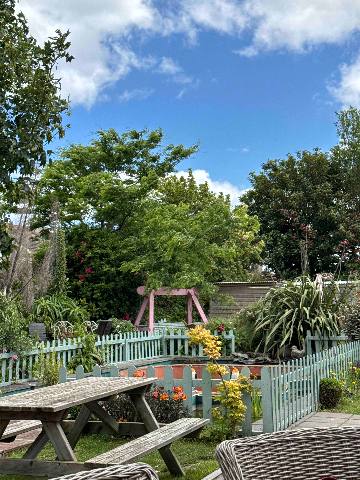
By the garden sculptures, nature has become something people can shape, label and borrow from. The saved note puts the garden’s split plainly: “Cottage gardens, originating in England, were historically utilitarian with herbs and vegetables. However, they evolved to include beautiful flower arrangements, showcasing informal, dense planting.” [9] [10] [11]
[9]
Kildare, wooden animal sculptures on a lawn near a country house
[10]
Dublin, Kildare, a stone fish sculpture in an outdoor garden setting against a mural-covered building

[11]
Islington, Cottage gardens, originating in England, were historically utilitarian with herbs and vegetables. However, they evolved to include beautiful flower arrangements, showcasing informal, dense planting.
The last saved note finds the same habit in a drink: “Cappuccino takes its name from the Capuchin friars: its coffee-and-milk coloring recalled their brown habits and pale hoods.” Nature here is usually already arranged, named or framed.